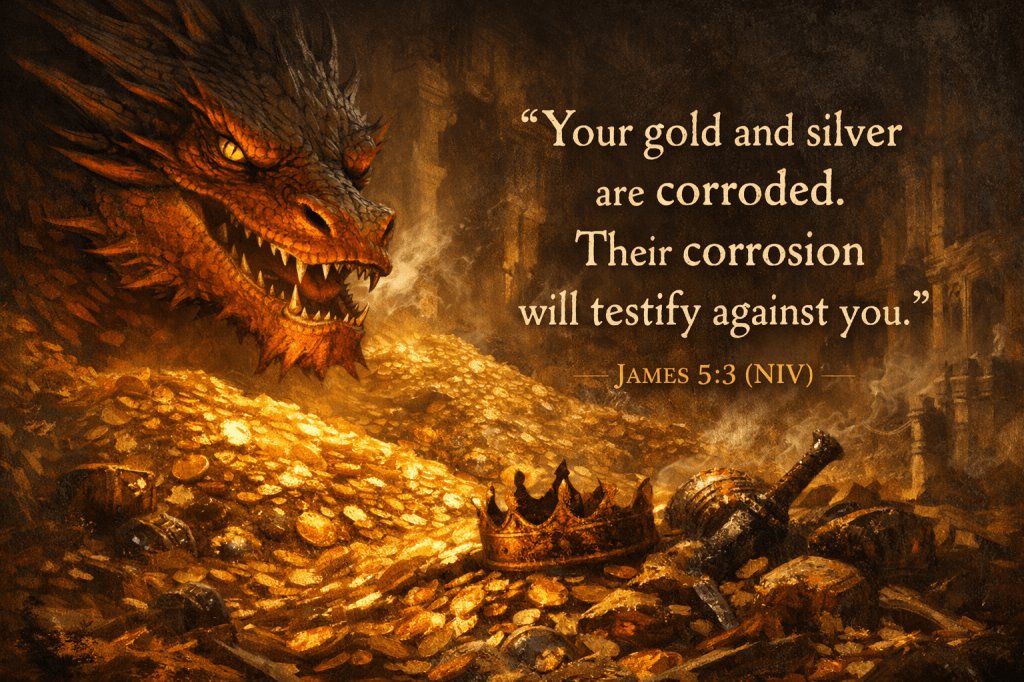
The Damnation of Smaug
I’ve been thinking a lot about Middle-earth lately. Middle-earth is the setting for the epic and wonderful stories created by J.R.R. Tolkien. You might know Middle-earth from stories like The Hobbit or The Lord of the Rings.
I often go back to these stories because, even though they are pure fantasy and could never happen in the real world, they also explore many of the complicated feelings and experiences that people go through. So, even though they are fiction, they also speak many truths.
In The Hobbit, Smaug is the powerful dragon who comes down upon the Lonely Mountain (the home of the dwarves) and takes it by force. Once, Erebor of the Lonely Mountain was a thriving kingdom filled with skilled craftsmanship, busy trade, lively music, and industry. Nearby Dale was a prosperous town, thriving from the goods and riches flowing from the mountain.
But Smaug destroys all of it.
He burns Dale to the ground.
He chases the dwarves away, forcing them into exile.
And then he does something revealing:
He doesn’t actually rule the mountain.
He just occupies it.
He gathers up all the treasure of gold, jewels, family heirlooms, and generations of work into a single, massive pile. And there he lies, curled around this wealth he didn’t create, guarding riches he doesn’t even use. He measures his greatness by the height of the mountain of treasure beneath him.
Smaug has a certain type of intelligence. He can speak, reason, and boast. He even calls himself “King under the Mountain.”
But being a king of such riches doesn’t bring life or community.
No shared prosperity.
No thriving society.
No lively living.
Just accumulation. Isolation. Fear.
And when even one cup of his treasure goes missing, his reaction isn’t calm or thoughtful; it’s catastrophic. In a rage, he flies to Lake-town and burns it, attacking innocent people who had nothing to do with the theft. His desperate need to protect his treasure results in destruction for others.
That’s Smaug.
A dragon who confuses having possessions with real power.
A ruler whose safety depends on hoarding his wealth.
A king whose reign leaves behind ashes and destruction.
Over the next few posts, I want to explore what Smaug’s story reveals about power, wealth, and the kind of kingdom we really want.
Part One: The Damnation of Smaug — how hoarding wealth can corrupt the soul.
Part Two: The Desperation of Smaug — how threatened power leads to destruction.
Part Three: The Dethroning of Smaug — what happens when a better ruler takes over.
Today, we start with his downfall.
When Wealth Becomes a Warning
In James 5:1–6, the New Testament gives one of its clearest warnings about wealth:
“Listen, you rich people, weep and wail because of the trouble ahead for you. Your wealth has decayed, and moths have eaten your clothes.
Your gold and silver are corroded. That corrosion will be evidence against you…”
James isn’t criticizing working hard or being good stewards of what you have. He’s warning against hoarding wealth; storing up riches while others suffer. Treasure kept away without caring for justice or kindness.
Smaug is a perfect example of that warning.
He doesn’t just own treasure.
He sits on it.
He doesn’t wisely manage wealth.
He entombs himself in it.
James says that hoarded gold and silver corrode over time. That it will testify against its owner. That it becomes evidence in God’s courtroom.
And Smaug’s treasure tells its own story.
It speaks of a city burned to ashes.
It speaks of families displaced.
It speaks of abundance taken away and not shared.
The dragon’s destruction isn’t just death. It’s the result of one turned inward, wrapped around possessions, unable to see power as anything but control.
Smaug’s downfall happens long before an arrow strikes him.
It begins the moment treasure becomes his throne.
And this isn’t just a story about a dragon.
James isn’t talking about mythical creatures.
He’s speaking to people who have confused accumulating wealth with security and hoarding with greatness.
The danger of Smaug isn’t just that he breathes fire.
It’s that he shows us what happens when wealth stops serving us and starts ruling over us.
Next time, we’ll look at what happens when such a ruler feels threatened; when even a missing cup exposes how fragile a hoarded kingdom truly is.
Because desperation is what follows damnation.
And the greedy, desperate dragon does not care who gets burned.
Subscribe
Make sure to subscribe to the blog or follow me on Facebook (both options available at the bottom of the page). Please share with your friends or church if you find these posts helpful or thought-provoking.
Support
If you find any of this helpful and want to support these projects, you can click the Support button below to “Buy Me A Coffee”
 Tanner H Griffin
Leave a comment