Somewhere along the way, many of us accepted a quiet lie.
The lie goes like this: Christianity is something done for us, but not necessarily in us or through us.
We were told (sometimes explicitly, often subtly) that if we affirm a few essential truths about God, agree that Jesus died for our sins, and ask for forgiveness, then the main thing is settled. The spiritual ledger is cleared. Heaven is secured. Assurance is granted.
And that’s the goal.
But is it?
When Grace Becomes Small
I’m grateful for forgiveness. I’m grateful for assurance. I’m grateful that salvation does not rest on my moral performance.
But when grace is reduced to a transaction, it becomes smaller than the gospel the New Testament announces.
Dietrich Bonhoeffer warned the church about this in The Cost of Discipleship. He called it “cheap grace”: grace without discipleship, forgiveness without repentance, baptism without obedience.
Cheap grace says:
- Your sins are forgiven.
- Your future is secure.
- Your life can remain largely unchanged.
Costly grace says:
- You are forgiven.
- Now follow.
- Now die.
- Now live differently.
Not to earn anything.
But because something real has happened.
Forgiven… and Then What?
In much of modern Christianity, the central question has become:
Where will you go when you die?
That’s not an unimportant question. But it’s not the only one.
A far more historically Christian question might be:
What kind of person are you becoming right now?
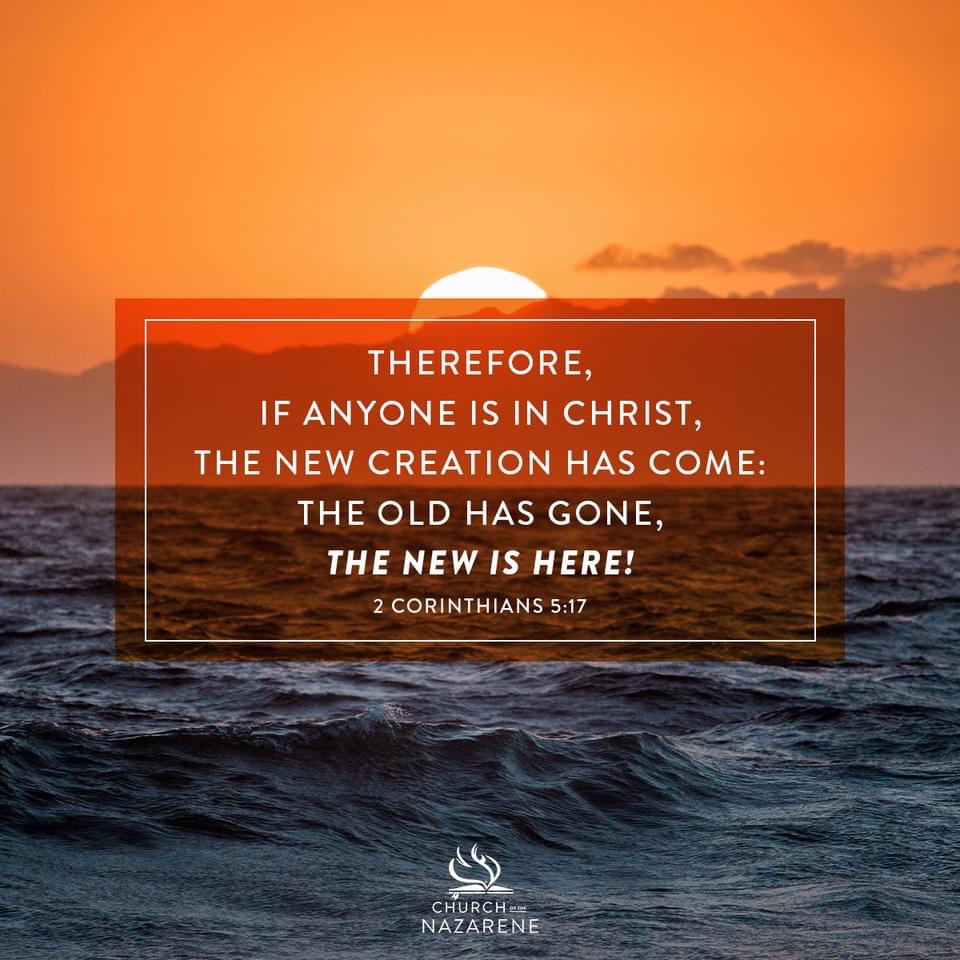
In my own theological tradition (the Wesleyan holiness stream shaped by voices like John Wesley), salvation has never meant only pardon. It has meant transformation.
Justification is real. We are forgiven.
But sanctification is also real. We are changed.
Sanctification does not mean that everything you do is perfect. It does not mean you never struggle. It does not mean you float above temptation, frustration, or weakness.
It means your entire life has been set apart for God’s holy purposes.
Here.
Now.
In this life.
In your neighborhood.
At your table.
In your work.
With your money.
With your relationships.
Grace is not just the cancellation of debt. It is a reorientation of desire.
A Different Kind of Life
A Christianity that stops at forgiveness can easily coexist with:
- Unexamined materialism
- Harsh political hostility
- Casual dishonesty
- Relational indifference
- Habitual self-protection
But a Christianity that believes the Spirit sanctifies and sets us apart for God’s purposes cannot remain untouched or indifferent.
If the Holy Spirit is truly at work, then our:
- Motivations change.
- Goals change.
- Use of time changes.
- Relationship to power changes.
- Relationship to money changes.
- Relationship to our neighbors changes.
We begin to live with different purposes.
Not just “a better life.”
A differently ordered life.
More Than a Ledger
It is possible to believe that Jesus’ death completed a transaction on a spiritual ledger and never wrestle with what that means for how we treat people.
It is possible to affirm atonement and never allow the Spirit to substitute new loves for old ones.
It is possible to agree with orthodox theology and remain largely untouched in practice.
But the gospel of the Kingdom announces something more disruptive and more beautiful.
The Kingdom of God is not merely a relocation plan for after death. It is God’s reign breaking into ordinary life now. It is the Spirit shaping a people whose lives begin to look like Jesus, not in some idealized stereotype, but in direction.
Love becomes more than sentiment.
Holiness becomes more than keeping the right rules.
Faith becomes visible.
Seeing Their Faith
In the Gospels, Jesus doesn’t simply commend correct ideas. He responds to visible trust. He responds to faith embodied, faith enacted, faith expressed in action.
He sees their faith.
Not just what they affirm.
But how they live.
That is the kind of Christianity I long for.
Not anxious moralism.
Not cold transaction.
Not abstract belief alone.
But a Spirit-formed life that has been wholly set apart; A life that announces grace and embodies it.
Grace that forgives.
Grace that frees.
Grace that reforms our loves.
Grace that moves through us toward our neighbors.
Grace that does something in us.
Grace that does something through us.
Anything less is too small.
And the gospel is anything but small.
Subscribe
Make sure to subscribe to the blog or follow me on Facebook (both options available at the bottom of the page). Please share with your friends or church if you find these posts helpful or thought-provoking.
Support
If you find any of this helpful and want to support these projects, you can click the Support button below to “Buy Me A Coffee”
 Tanner H Griffin
Leave a comment