This is the third and final post in a short series reflecting on formation, power, and the public witness of the church.
In the first post, I explored how concern for culture became an economy of outrage. In the second, I reflected on how a tradition shaped by revival and conversion drifted toward control and coercion—often encouraged by outside powers eager to harness the church’s loyalty and language.
This final post presses the question even deeper: what does our use of Jesus’ name reveal about what we actually believe—and what are others seeing when they see our faith?
If you haven’t read the earlier posts, you can find them here:
When Moral Concern Becomes Clickbait
The Gospel That Doesn’t Need Changed Hearts
Using Jesus
I’ve wrestled with this one.
Not because the concern feels small, but because it feels heavy. It’s easier to critique tone. Easier to talk about platforms, politics, or culture. It’s much harder to ask whether something deeper has shifted; whether the crisis we’re facing is not just about influence or alignment, but about belief itself.
This post is not about deciding who is “in” or “out.” It’s not about declaring who is saved and who isn’t. It’s about something more foundational than that.
It’s about whether the way we are using the name of Jesus reflects actual trust in him.
In the first post of this series, I reflected on how moral concern gave way to an economy of outrage. In the second, I explored how revival and conversion quietly yielded to compliance and control, aided by both fear within the church and by political movements eager to harness the loyalty and language of Christians.
But there is something underneath all of that.
There is a kind of Christianity that speaks constantly about Jesus and yet shows almost no evidence of fearing him.
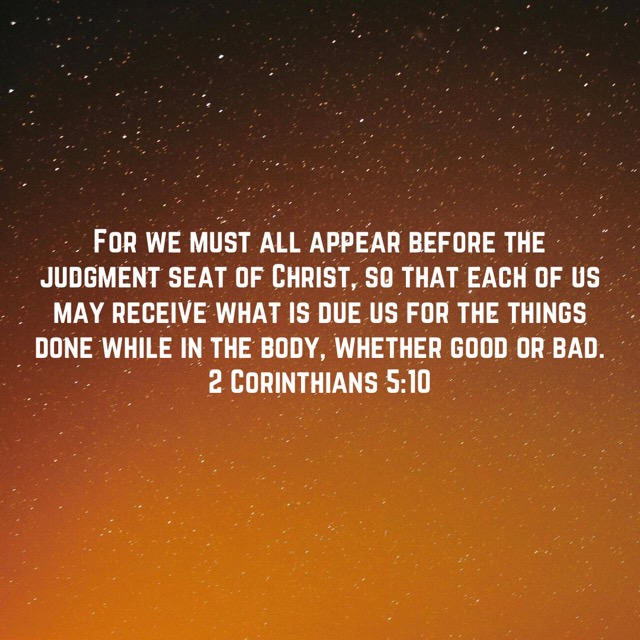
If someone truly believes in a crucified and resurrected King (if they believe He sees, judges, and will one day set all things right), there are certain lines you do not casually cross. If Jesus is who scripture says He is, and is going to do what scripture says He is going to do, Christian worship should be more sincere, and people should be more reverent and humble when using His name.
And yet we see something else.
We see spiritual language used to shield dishonesty.
We see vulnerable people harmed while leaders build platforms.
We see cruelty justified as courage.
We see power pursued with no concern for Jesus’ commands.
What is striking is not the presence of conviction, but the absence of fear.
Jesus reserved some of his strongest warnings for those who would lead others astray while claiming to represent him. He spoke of severe accountability for those who burden the vulnerable, who devour the flock, who use religion as cover. Those words were not subtle. They were not mild.
If those warnings are real and if judgment is real, then the way some Christian leaders operate today should be terrifying.
But it doesn’t seem to be.
That absence of reverence forces an uncomfortable question: what if Christianity, for some, has become something other than faith?
What if it has become a system? A structure that provides influence, identity, protection, and wealth? In such a system, Jesus is invoked but not obeyed. Scripture is quoted but not submitted to. Faith becomes useful for rallying loyalty, useful for securing votes, and useful for growing audiences.
But usefulness is not the same thing as belief.
Belief bows.
Belief repents.
Belief acknowledges Jesus as a king who will judge us all.
When Christianity functions primarily as a vehicle for power, something has gone terribly wrong. Not because Christians shouldn’t care about society, but because the name of Jesus is being leveraged rather than trusted.
And here’s the part that concerns me most: this doesn’t stay at the leadership level.
What we consume shapes us. When we repeatedly take in a version of Christianity that is loud, combative, dismissive, and unafraid of harming others for a greater cause, we begin to mirror it. We baptize anger as righteousness. We sanctify suspicion. We confuse dominance with faithfulness.
And slowly, almost imperceptibly, Jesus becomes secondary to the tribe.
That is not a small shift.
If Jesus is truly the crucified King, if the cross is not a token of power but the reality of God’s Kingdom, then self-giving love is not optional. Humility is not weakness. Truth is not expendable. The fear of the Lord is not outdated.
But if we can manipulate, demean, and deceive without restraint while still speaking the language of faith, then something foundational has been hollowed out.
The greatest atheism in our culture may not be a loud rejection of God. It may be practical unbelief wrapped in Christian vocabulary. It may be the quiet conviction that there will be no reckoning, no accountability, no King who asks how his name was used.
That kind of unbelief is far more dangerous than skepticism. Because it carries a Bible in one hand and ambition in the other.
This isn’t written in anger. It’s written in grief.
I love the church. I believe Jesus is Lord. I believe He is risen and that He will come again. And precisely because I believe that, I cannot ignore what it means when His name is invoked without reverence, when His authority is claimed without obedience, when His kingdom is proclaimed without resembling His character.
If we care about the witness of the church, we have to ask not only what we are saying about Jesus, but whether we actually believe him.
Because people are watching.
They are watching how we handle power.
They are watching how we treat the vulnerable.
They are watching whether our confidence is rooted in love or in power.
They are seeing our faith.
And they ask themselves why they should feel compelled to worship and serve King Jesus when those who claim His name so often fail to do so.
Subscribe
Make sure to subscribe to the blog or follow me on Facebook (both options available at the bottom of the page). Please share with your friends or church if you find these posts helpful or thought-provoking.
Support
If you find any of this helpful and want to support these projects, you can click the Support button below to “Buy Me A Coffee”
 Tanner H Griffin
Leave a comment