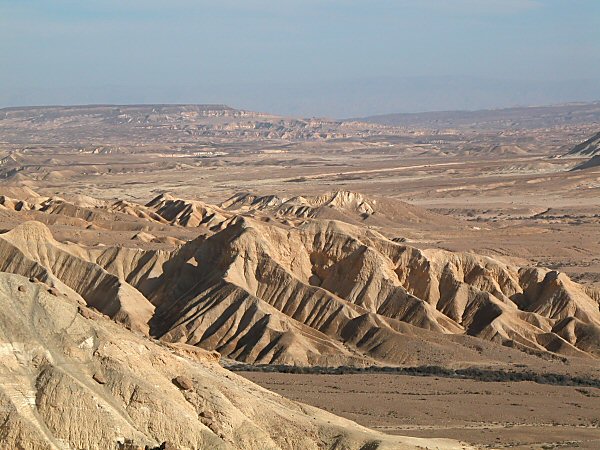
…choose for yourselves this day whom you will serve… But as for me and my household, we will serve the Lord.”
Joshua 24:15
At this point in the blog series, you are probably growing quite familiar with the Biblical construct of “two kingdoms”: the Kingdom of God and the Kingdom(s) of the world. And as a reminder, the word kingdom should be understood most often as “reign” or “rule”. It is not meant to be an indicator of geography, but of authority. A kingdom is that which is ruled and shaped by the king.
What’s “Out There”?
Imagine yourself a citizen of a kingdom in biblical times. A king has people and territory under his control. But what would you find if you ventured outside of that kingdom?
You might find yourself in another kingdom with different laws, customs, languages, values, and ethics shaped by the king of that kingdom.
Or you might find yourself outside of any kingdom. You could be in an unoccupied area where there is no king to govern, no laws to follow, and no customs to practice. You could find yourself in the land between kingdoms. You could find yourself far away from the influence and control of a ruler. It is like the Wild West of American history. Or the Congo in Joseph Conrad’s “Heart of Darkness.” It is a place that is ungovered. The Bible has a name for this type of place between kingdoms: Wilderness
Having grown up in the church, I have heard hundreds of lessons and sermons that incorporated the wilderness somehow. As a pastor, I have probably preached at least a dozen. And those usually include at least one of the following themes:
- Wilderness is a place of testing
- Hebrews 3:8-9:-“Do not harden your hearts as you did in the rebellion, during the time of testing in the wilderness, where your ancestors tested and tried me, though for forty years they saw what I did.”
- Wilderness is a place of discomfort
- Deuteronomy 8:15- “He led you through the vast and dreadful wilderness, that thirsty and waterless land, with its venomous snakes and scorpions. He brought you water out of hard rock.”
- Wilderness is a place of judgement
- Ezekiel 20:35-37-“I will bring you into the wilderness of the nations and there, face to face, I will execute judgment upon you. As I judged your ancestors in the wilderness of the land of Egypt, so I will judge you, declares the Sovereign Lord. I will take note of you as you pass under my rod, and I will bring you into the bond of the covenant.”
- Wilderness symbolizes liminal spaces in our lives
- We relate to the Exodus and the idea that God leads people out of “Egypt”, but that they don’t go directly into the “promised land”- There is time in the wilderness
In all those lessons and sermons, I don’t recall wilderness being explained in relationship to kings and kingdoms. Maybe it was discussed indirectly in the example that the Israelites were in the wilderness because they escaped from Pharoah and Egypt. And maybe I wasn’t paying attention or maybe I didn’t have the capacity to comprehend it, but I don’t remember ever thinking about wilderness as a “kingdom word” and specifically the place where kingdoms were absent.
Speaking of No Kingdom
Over the past few years, as I have been increasing aware of the “kingdomness” of the Kingdom of God, the idea that wilderness was a place between kingdoms revealed some exciting and important lessons. More than anything it gave me a lens to see that when the Bible mentions wilderness, I’m not just supposed to envision a rocky and sandy landscape. My attention should be on the character’s relationship to kingdoms and authorities. As a result, the wilderness stories have revealed to me a more dangerous, radical, and disruptive God than I knew. I’ll briefly share a few examples and ultimately end up focused on the emphases of this blog series: The Gospel, Jesus, and the Kingdom of God.
Your Own Personal Exodus
Moses, having grown up in the Pharoah’s house in Egypt, and having killed an Egyptian, escapes the threat of the Pharoah by going to Midian. the third chapter of Exodus tells us that it was while Moses was leading the flock in the wilderness when the famous burning bush incident occurred. This is one of the first moments where we see God being present, not in a temple in a kingdom, but the land between the kingdoms – God was in the wilderness.
I hope that you are starting to get a sense for why this understanding of the wilderness has had a profound effect on my faith. In the ancient world, there would have been no separation of religion and government. Kings claimed divine appointment. The source of a rulers power was often understood to be that ruler’s connection with the deity of that land. A god in the wilderness would be quite unexpected. So can you imagine how radical a god in the wilderness being worshipped by a people in the wilderness must have seemed.
The Israelite’s Time in the Wilderness Was “In-tents”
Now let’s fast forward from Moses as an individual that escaped Pharaoh’s rule by heading into the wilderness, to the Israelites who, as a people group, escaped Pharaoh’s rule by heading into the wilderness. During the 40 years of wilderness wandering, the Israelites were in the land between Egypt and the Promised land. This time in the wilderness was a period to turn away from the ways of Egypt and turn towards life in God’s Kingdom. It was a time and place of being set apart for God’s purposes – to be sanctified. It was in this space that the Israelites received the Law and learned how live according to God’s calling for them. They learned how to follow and depend upon God.
“Remember how the Lord your God led you all the way in the wilderness these forty years, to humble and test you in order to know what was in your heart, whether or not you would keep his commands. He humbled you, causing you to hunger and then feeding you with manna, which neither you nor your ancestors had known, to teach you that man does not live on bread alone but on every word that comes from the mouth of the Lord.”
Deuteronomy 8:2-3
Which Way Did They Go?
The wilderness was not just a place of physical discomfort and testing, but it was also a place where significant decisions are made. It is where the Israelites had to choose to trust God and follow His commandments or to revert to their old ways and desires. And the was not as obvious or easy as we may assume.
And they said to each other, “We should choose a leader and go back to Egypt.”
Numbers 14:4
But despite the challenges of life in the wilderness, God lovingly guided His people, not only to get them from Egypt to the Promised Land, but also to help them grow in their faith and trust in God. Throughout their 40 years of wandering, God was always close by. He “tabernacled” with them, showing His presence and love. The tabernacle, a movable sanctuary, was where God was present among His people.
“Hey John, Did We Have To Be in the Wilderness?
Jumping ahead to the time of Jesus, John the Baptist preached his message out in the wilderness, which was understood as a place separate from the temple and religious leaders. He urged people to turn away from their old ways and be baptized, symbolizing their choice to enter into God’s Kingdom. The wilderness was where individuals had to decide which path to follow.
Many of those who sought baptism from John were probably those who were excluded by the temple system. John’s teachings offered them a way to connect with God’s kingdom without having to gain the approval of gatekeeping religious leaders. And When Jesus was baptized by John in the wilderness, God spoke, announcing his approval of Jesus and what had occurred. This was a powerful moment where God affirmed His presence beyond the temple.
After His baptism, Jesus faced temptations from the devil in the wilderness (Matthew 4:1-11). In this challenging time, Jesus remained steadfast in His commitment to God’s kingdom and turned away from worldly power and authority. His responses to these temptations showed His dedication to his mission.
Again, the devil took him to a very high mountain and showed him all the kingdoms of the world and their splendor. “All this I will give you,” he said, “if you will bow down and worship me.”
Jesus said to him, “Away from me, Satan! For it is written: ‘Worship the Lord your God, and serve him only.’”
Matthew 4:8-10
Additional Scriptures and Discussion Questions
Question: Choosing a Kingdom
- How does Joshua 24:15 challenge us in our daily lives when it comes to choosing between God’s kingdom and the kingdoms of the world?
- In what ways do we experience the choice between these two kingdoms today?
Question: The Wilderness Experience
- How do you relate to the idea of the wilderness as a place of testing, discomfort, and judgment?
- Have you ever experienced a “wilderness” period in your life? How did it shape your faith?
Question: God’s Presence in the Wilderness
- What significance do you see in God “tabernacling” with the Israelites in the wilderness?
- How does the idea of God being present in the wilderness challenge or reinforce your understanding of where God can be found?
Question: John the Baptist and the Wilderness
- Why do you think John the Baptist’s ministry took place in the wilderness, away from the temple and religious authorities?
- How does John’s call to repentance and baptism in the wilderness invite us to rethink our own allegiances?
Question: Jesus in the Wilderness
- How does Jesus’ experience of temptation in the wilderness reflect His commitment to God’s kingdom?
- What lessons can we learn from Jesus’ responses to temptation that can help us in our own wilderness experiences?
Question: Personal Reflection
- How can you apply the lessons of the wilderness to your current life situation or spiritual journey?
- Reflect on a time when you felt you were in a wilderness, between two kingdoms. What choices did you face, and what did you learn from that experience?
As it is written in the book of the words of Isaiah the prophet:
“A voice of one calling in the wilderness,
‘Prepare the way for the Lord,
make straight paths for him.
Every valley shall be filled in,
every mountain and hill made low.
The crooked roads shall become straight,
the rough ways smooth. And all people will see God’s salvation
Luke 3:4-6
Next week’s Topic: Prayer
To start from the the first post in this series, click here:
Speaking of the Kingdom #1: Intro
Make sure to subscribe on the blog or follow me on Facebook (both options available at the bottom of the page). Please share with your friends or church if you find these posts helpful or thought provoking.
Support
If you find any of this helpful and want to support these projects you can click the Support button below to “Buy Me A Coffee”
 Tanner H Griffin
Leave a comment